Formation & Members
Slayer, a band not to be confused with the American thrash metal giants of the same name, emerged from Japan’s vibrant punk and hardcore scene in the late 1980s. Known in Japan as スレイヤー, this band carved out a unique niche with their ferocious sound and defiant attitude. The band was formed in 1986 in Tokyo, a city that was quickly becoming a melting pot for alternative music genres. The original lineup consisted of lead vocalist and guitarist Kazuki Tanaka, bassist Hiroshi Nakamura, and drummer Akira Yamamoto. Over the years, the lineup saw several changes, but the core members remained dedicated to maintaining the band’s raw energy and commitment to the hardcore punk ethos.
Musical Style & Characteristics
Slayer’s music is characterized by a blistering pace and an aggressive sound that captures the essence of hardcore punk while infusing elements of thrash and speed metal. Their tracks are often short, direct, and packed with intensity, reflecting themes of societal disillusionment and personal angst. The band is known for their fast-paced guitar riffs, relentless drumming, and Tanaka’s guttural vocal delivery, which together create an explosive auditory experience. Slayer’s music often features politically charged lyrics that challenge authority and express a raw, unfiltered perspective on the world, a hallmark of the punk genre.
Key Works & Discography
Slayer’s discography, though not extensive, is impactful and influential. Their debut album, “Outrage and Fury,” released in 1988, set the tone for their career with its aggressive sound and uncompromising lyrics. The album includes standout tracks such as “Riot in the Streets” and “Anarchy’s Call,” which quickly became anthems within the punk community. Their follow-up album, “Chaos Reigns” (1990), further solidified their reputation, showcasing a more refined yet still raw sound with tracks like “Breaking Chains” and “System Collapse.” Though they released a handful of EPs and live recordings throughout the 1990s and early 2000s, it was these early works that left a lasting impression on the hardcore punk landscape both in Japan and internationally.
Influence on Other Bands/Scenes
Slayer’s influence extends beyond their own discography, impacting the broader punk and hardcore scenes both in Japan and abroad. Their aggressive style and anti-establishment ethos inspired a new generation of bands looking to push boundaries and challenge norms. Bands such as Gauze and The Comes, who were contemporaries in the Japanese punk scene, often cited Slayer as an influence in interviews. Internationally, Slayer’s music found a niche among underground hardcore circles in Europe and North America. The band’s willingness to blend punk with thrash elements also paved the way for future acts interested in genre-bending and experimentation.
Breakups or Reunions
Like many bands in the punk scene, Slayer’s journey was not without its turbulence. Internal conflicts and the pressures of maintaining a band in the DIY punk world led to their first breakup in 1995. However, the demand from fans and the persistent influence of their music facilitated a reunion in 2000. This reunion was marked by a series of live shows and a renewed commitment to recording new material. While they never quite captured the widespread attention they had in their initial run, this period allowed them to reconnect with their core fanbase and introduce their music to a new generation.
Current Reputation & Legacy
Today, Slayer is regarded as a seminal figure in Japan’s punk and hardcore history. Despite never achieving mainstream success, their contribution to the genre is acknowledged by critics and fans alike. Slayer’s music continues to resonate with those who find solace in its raw energy and uncompromising message. The band’s legacy is preserved through numerous compilations and tribute albums that celebrate their influence and continue to introduce their music to new audiences. In the underground punk scene, Slayer is often mentioned alongside other pioneering acts that helped shape the sound and spirit of hardcore.
Conclusion
Slayer’s story is one of resilience, creativity, and defiance. Emerging from Tokyo’s thriving music scene in the late 1980s, they crafted a sound that was both aggressive and influential, leaving an indelible mark on punk and hardcore music. Despite the challenges of band dynamics and the ever-evolving music industry, Slayer’s legacy endures. Their music continues to inspire and energize, serving as a testament to the enduring power of punk. As long as there are those who seek out music that challenges the status quo and speaks truth to power, Slayer’s legacy will live on, echoing through the halls of punk history.
Band facts
| Formed | 1981 |
|---|---|
| Disbanded | 2019 |
| Origin | Huntington Park |
| Genres | thrash metal |
| Labels | Metal Blade Records / Def Jam Recordings / American Recordings / Nuclear Blast |
| Members | Jeff Hanneman / Kerry King / Tom Araya / Dave Lombardo / Gary Holt / Paul Bostaph |
Sources: Wikidata / MusicBrainz
Discography
| Year | Type | Title |
|---|---|---|
| 1983 | Demo | Nocturnal Spectre (rehearsal) |
| 1983 | Album | Show No Mercy |
| 1984 | EP | Haunting the Chapel |
| 1985 | Album | Hell Awaits |
| 1986 | Album | Reign in Blood |
| 1988 | Album | South of Heaven |
| 1990 | Album | Seasons in the Abyss |
| 1994 | Album | Divine Intervention |
| 1996 | Album | Undisputed Attitude |
| 1998 | Album | Diabolus in Musica |
| 2001 | EP | God Hates Us All |
| 2001 | Album | God Hates Us All |
| 2006 | EP | 3 Song Sampler |
| 2006 | Album | Christ Illusion |
| 2008 | Album | Dead Commander |
Show all
| Year | Type | Title |
|---|---|---|
| 2009 | Demo | Def Jam Demo |
| 2009 | Album | World Painted Blood |
| 2015 | Album | Repentless |
| 1984 | Compilation | ’Til Death Do Us Part… |
| 1985 | Live | 1985‐05‐28: The Dynamo Club, Eindhoven, Netherlands |
| 1985 | Live | Church of Slayton |
| 1985 | Live | Live Undead |
| 1989 | Compilation | Boys Keep Swinging |
| 1990 | Live | Captors of Sin |
| 1991 | Live | Aggresive Perfector – Live in Nuremberg, June 14, 1985 |
| 1991 | Live | Decade of Aggression Live |
| 1991 | Live | Killing for a Living |
| 1991 | Live | Live in Genk |
| 1991 | Live | Obscure and Obscene |
| 1991 | Live | Praise of Death |
| 1992 | Live | Dance of the Dead |
| 1992 | Live | Devil’s Disciples |
| 1992 | Live | Die by the Sword |
| 1992 | Live | Wardance |
| 1993 | Compilation / Live | Live Undead / Haunting the Chapel |
| 1994 | Live | From the Mixing Desk 1994 |
| 1994 | Live | Slaytanic Comeback! |
| 1995 | Live | Live Intrusion |
| 1995 | Compilation | Seasons of Aggression: The Best of Slayer |
| 1995 | Live | Slaughter in the North |
| 1995 | Live | Spirits in Black |
| 1995 | Live | The Sickness Within |
| 1996 | Compilation / Live / Demo | Escape From the Studio ’95 |
| 1998 | Live | Back in the Game |
| 1998 | Compilation | Diabolus in Musica Tour Sampler |
| 1998 | Compilation | Seasons in the Abyss / Reign in Blood |
| 2001 | Live | Darkness of Christ |
| 2003 | Compilation | Soundtrack to the Apocalypse |
| 2003 | Live | War at the Warfield |
| 2004 | Live | Spitting Poison |
| 2004 | Live | Still Reigning |
| 2008 | Live | Live Intrusion |
| 2009 | Live | Bloody Sunday |
| 2009 | Live | Catcher in the Marijuana |
| 2009 | Live | Messe Painted Blood |
| 2009 | Live | Rips Up Waldrock |
| 2010 | Live | Back to the Seasons in the Abyss |
| 2010 | Live | Live From Sofia, Bulgaria |
| 2010 | Live | The Big 4: Live From Sofia, Bulgaria |
| 2010 | Compilation | The Vinyl Conflict |
| 2012 | Compilation | Greatest Hits |
| 2012 | Compilation / Demo | Hell Awaits Demos 1984 |
| 2012 | Live | Reign in Loud |
| 2013 | Live | AOL Music Sessions 2010 |
| 2013 | Compilation | B-Sides & Rarities |
| 2013 | Compilation / Demo | Seeds of Horror |
| 2013 | Compilation / Live / Demo | Sons of Satan: Rare Live and Rehearsal 1983 |
| 2014 | Live | Wacken 2014 |
| 2014 | Live | War With Death |
| 2016 | Compilation | Evil Metal Demos |
| 2017 | Live | Combat Tour ’85: The Ultimate Revenge for Disco |
| 2018 | Live | Mind Control… Live |
| 2018 | Live | Monsters of Rock 1994: The Classic Buenos Aires Broadcast |
| 2018 | Live | Reign in Pain – Nottingham 1987 |
| 2019 | Live | The Repentless Killogy (live at The Forum in Inglewood, CA) |
| 2020 | Live | Darkness Reigns (Live 1992) |
| 2020 | Live | Final Concert in Europe: Stuttgart – Germany, 03/08/2019 |
| 2020 | Live | Have a Good New Year, Berkeley: Live at Ruthie’s Inn, Berkeley, CA. December 31st, 1984 |
| 2020 | Live | South of Heaven (Live) |
| 2021 | Live | Spirit in Black |
| 2022 | Live | Damnation’s Edge: Live Buenos Aires ’94 |
| 2022 | Live | Reign This Night (Live 1984) |
| 2022 | Live | The Hellish Years (Radio Broadcast Recordings) |
| 2023 | Live | Live in Hell, Radio Broadcast Recording |
| 2023 | Live | Marquee Awaits 1985 |
| 2024 | Live | At the Big 4 Festival (Gothenburg broadcast recording) |
| 2024 | Live | Crowded Tombs |
| 2024 | Live / Demo | Haunted Tapes – 1984 Demo & Concert |
| Live | 1998-06-25: Roskilde Festival, Roskilde, Denmark | |
| Live | 2007‐06‐02: Rock am Ring, Nürburgring, Nürburg, Germany | |
| Live | 2010‐08‐20: UIC Pavillion, Chicago, IL, USA | |
| Live | 2010‐10‐14: Allen County War Memorial Coliseum, Fort Wayne, IN, USA | |
| Live | 2011‐04‐11: Atlas Arena, Łódź, Poland | |
| Live | 2012-06-20: Arena Moscow, Moscow, Russia | |
| Live | 2013‐02‐24: Soundwave Sydney, Olympic Park, Sydney, Australia | |
| Live | Back in Blood | |
| Live | Diabolus in the East | |
| Live | European Carnage Tour 2011 | |
| Live | San Fransico – The Stone – 23‐08‐1985 | |
| Live | The Odeon, Birmingham: April 19th 1987 |
Streaming
Venues where this band has played
- Gothic Theatre — Englewood / United States
スレイヤー T-shirts
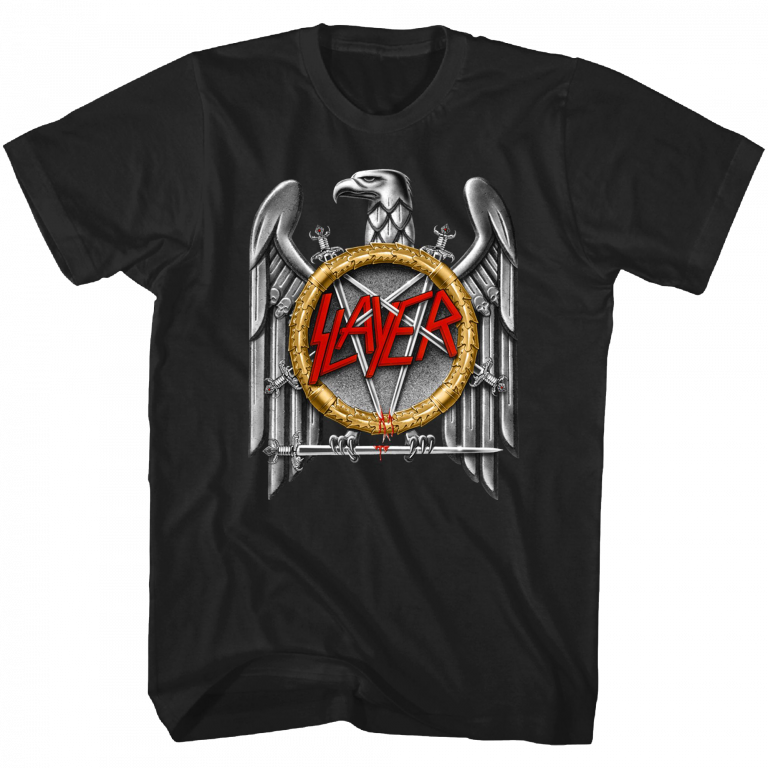
SLAYER BLACK EAGLE
2026 Current
Listed price $23.00 (approx. ¥3,500)
View detailsShips from: United States / shipping not included
Visit store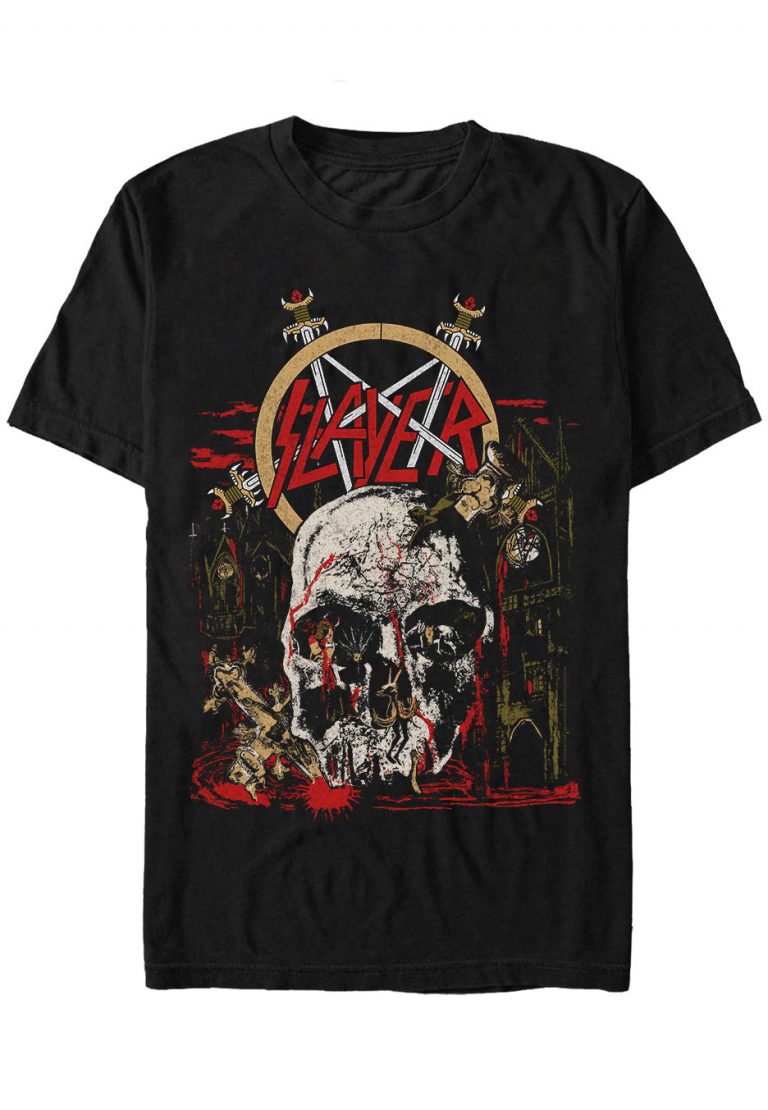
Slayer – South Of Heaven Vintage – T-Shirt
2026 Current
Listed price $27.99 (approx. ¥4,200)
View detailsShips from: Germany / shipping not included
Visit store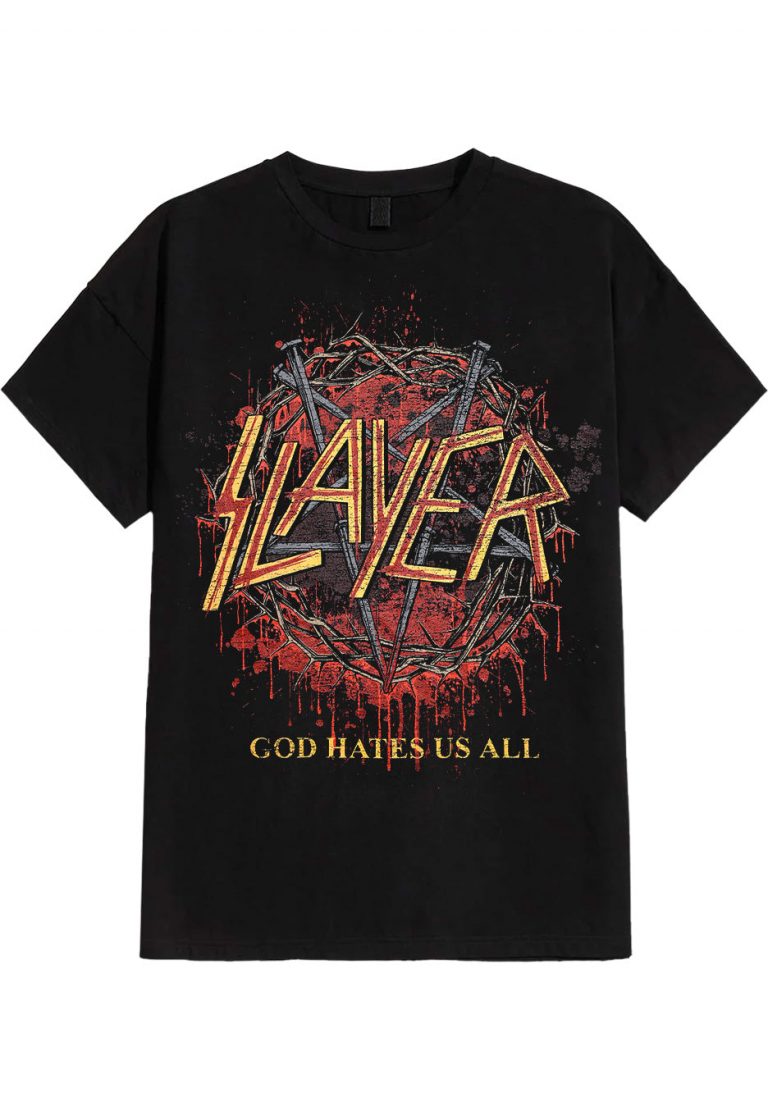
Slayer God Hates Us All – T-Shirt
2026 Current
Listed price $18.99 (approx. ¥2,800)
View detailsShips from: Germany / shipping not included
Visit store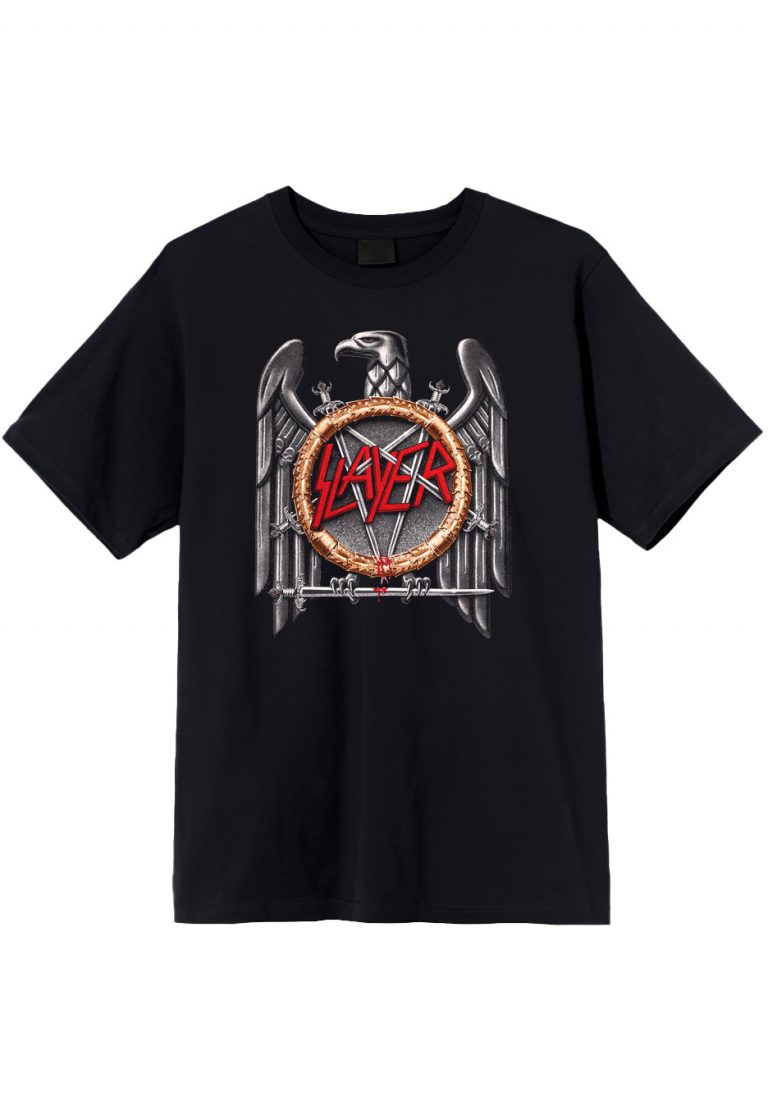
Slayer Silver Eagle – T-Shirt
2026 Current
Listed price $19.99 (approx. ¥3,000)
View detailsShips from: Germany / shipping not included
Visit storeスレイヤー Records
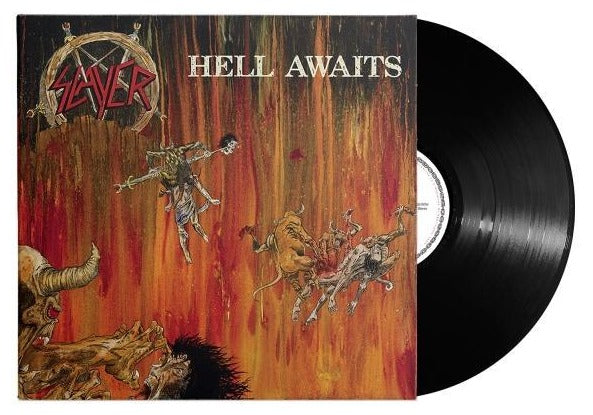
SLAYER ‘HELL AWAITS’ LP
1986 METAL BLADE / Current Edition
Listed price $30.00 (approx. ¥4,500)
View detailsShips from: United States / shipping not included
Visit store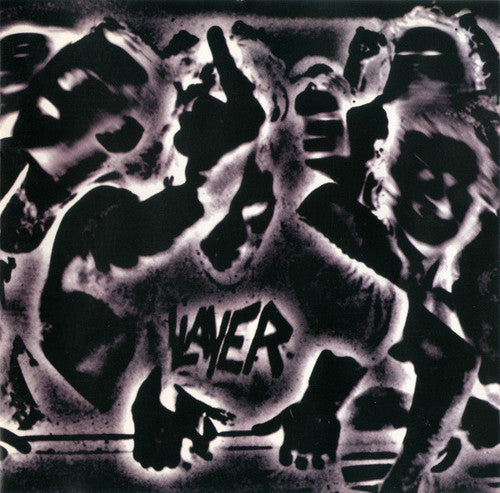
SLAYER ‘UNDISPUTED ATTITUTE’ LP
1986 Universal / Current Edition
Listed price $28.99 (approx. ¥4,300)
View detailsShips from: United States / shipping not included
Visit store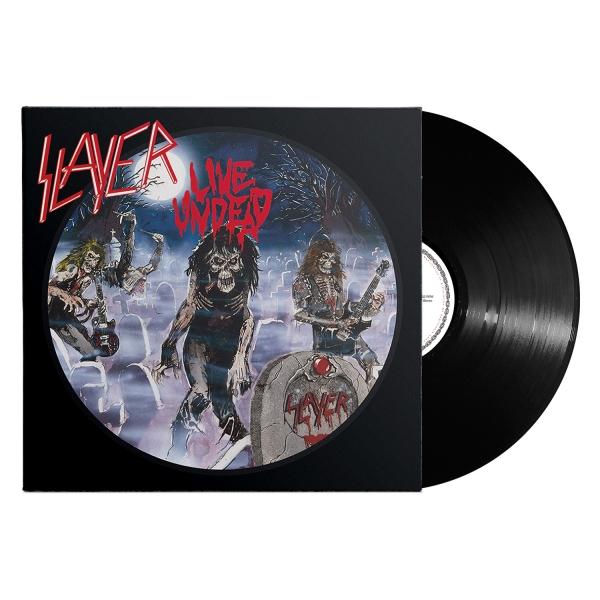
SLAYER ‘LIVE UNDEAD’ LP
1986 ORCHARD / Current Edition
Listed price $31.00 (approx. ¥4,700)
View detailsShips from: United States / shipping not included
Visit store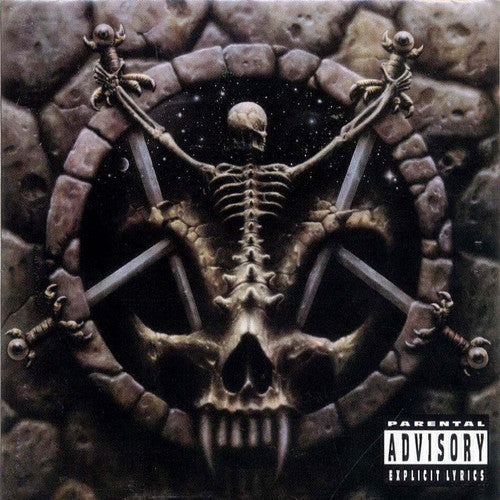
SLAYER ‘DIVINE INTERVENTION’ LP
1986 Universal / Current Edition
Listed price $29.00 (approx. ¥4,400)
View detailsShips from: United States / shipping not included
Visit store