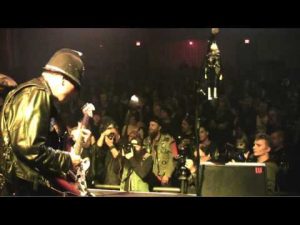

Formation & Members
Rhythm Activism was a Canadian musical collective based in Montreal, formed in 1985. The group revolved around the core duo of Sylvain Côté and Norman Nawrocki. Initially conceived as a poetry and music ensemble, the band quickly evolved into a politically charged “rock ‘n roll cabaret” act. Their performances and recordings often featured a blend of post-punk and folk elements, setting them apart in the vibrant Montreal music scene.
Musical Style & Characteristics
Rhythm Activism was known for its radical political stance, which was deeply embedded in their music. Their unique style combined elements of rock, punk, and folk, creating a sound that was both eclectic and provocative. The band was not afraid to tackle controversial topics, often using their music as a platform for political activism. This approach resonated with audiences looking for music that challenged the status quo and addressed pressing social issues.
Key Works & Discography
Over their career, Rhythm Activism released an impressive 36 albums. Notable works include “Blood & Mud” (1994), “More Kick!” (1995), and their final album “Jesus Was Gay” (1998), which was distributed by G7 Welcoming Committee Records. The band’s discography reflects their commitment to political activism, with several albums recorded and released on short notice to support causes such as the Oka Crisis of 1990 and a Quebec students’ strike.
Influence on Other Bands/Scenes
Rhythm Activism’s politically charged music and DIY ethos left a lasting impact on the punk and hardcore scenes in Canada and beyond. Their willingness to address social and political issues through music inspired a generation of musicians to use their art as a form of activism. The band’s collaborations and tours with notable acts like DOA, John Giorno, Mecca Normal, and Linton Kwesi Johnson further cemented their influence in the alternative music community.
Breakups or Reunions
While Rhythm Activism’s active years were marked by prolific output and dynamic performances, the band eventually disbanded after the release of “Jesus Was Gay” in 1998. There have been no official reunions since their breakup, but their music continues to resonate with fans and activists alike.
Current Reputation & Legacy
Today, Rhythm Activism is remembered as a pioneering force in the intersection of music and activism. Their ability to blend art with political commentary has left a lasting legacy, influencing both musicians and activists. The band’s work remains relevant, serving as a reminder of the power of music to inspire change and challenge societal norms.
Conclusion
Rhythm Activism’s unique blend of music and activism has secured their place in the annals of punk and hardcore history. Their fearless approach to addressing political issues through art continues to inspire new generations of musicians and activists. As a testament to their enduring impact, Rhythm Activism’s music remains a powerful example of how art can be used as a tool for social change.
Sources
en.wikipedia.org / www.wikidata.org / musicbrainz.org
Band facts
| Formed | 1986 |
|---|---|
| Disbanded | 1998 |
| Origin | Canada |
| Labels | G7 Welcoming Committee Records |
| Members | Norman Nawrocki |
Sources: Wikidata / MusicBrainz
Discography
| Year | Type | Title |
|---|---|---|
| 1994 | Album | Blood & Mud |
| 1998 | Album | Jesus Was Gay |
| 1995 | Live | More Kick! |