Formation & Members
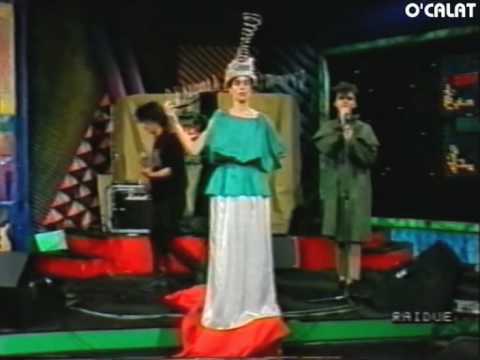
CCCP Fedeli alla Linea, often simply referred to as CCCP, emerged in 1982 amidst the vibrant yet politically tense backdrop of Italy. Originating from Emilia-Romagna, the band’s formation was spearheaded by vocalist Giovanni Lindo Ferretti and guitarist Massimo Zamboni. Both shared a vision of creating a sound that fused punk’s raw energy with a uniquely Italian identity. The band’s lineup was completed with Danilo Fatur, who served as the “artista del popolo” (people’s artist) and Annarella Giudici, the “benemerita soubrette” (distinguished showgirl), contributing to their theatrical live performances. Over the years, various musicians joined and left, but Ferretti and Zamboni remained the core driving force behind CCCP’s distinctive sound and ideology.
Musical Style & Characteristics
CCCP’s music was a bold fusion of punk rock and Italian folk influences, further enriched by socialist and communist themes drawn from their name, which refers to the Cyrillic abbreviation for the Soviet Union. They were pioneers of what came to be known as “Musica Melodica Emiliana,” a style that combined the aggressive urgency of punk with traditional Italian melodies. Their sound was characterized by raw guitar riffs, minimalist arrangements, and Ferretti’s spoken-word style vocals, often delivered with a sense of urgency and theatrical flair. Lyrically, CCCP tackled themes of societal disillusionment, political commentary, and existential musings, often delivered with a sardonic wit that became a hallmark of their identity.
Key Works & Discography
CCCP’s discography is compact yet impactful, with each release marking a significant evolution in their sound and thematic exploration. Their debut EP, Ortodossia, released in 1984, introduced them as a force to be reckoned with, blending punk aggression with political overtones. Their first full-length album, Affinità-Divergenze fra il Compagno Togliatti e Noi, followed in 1986, cementing their place in the Italian punk scene. This album included standout tracks like “Curami” and “Io Sto Bene,” which showcased their ability to blend catchy melodies with thought-provoking lyrics.
The subsequent albums, Socialismo e Barbarie (1987) and Epica Etica Etnica Pathos (1990), saw the band experimenting with more diverse sounds, incorporating elements of electronica and world music. The latter, often regarded as their magnum opus, featured collaborations with artists from various backgrounds and included tracks like “Amandoti,” which became one of their most enduring songs. CCCP’s discography remains a testament to their innovative spirit and refusal to be confined to a single genre.
Influence on Other Bands/Scenes
CCCP’s impact on the punk and alternative music scenes in Italy and beyond cannot be overstated. They were instrumental in shaping the Italian punk landscape, inspiring a generation of musicians to explore politically charged themes and embrace a DIY ethos. Their unique blend of punk rock with Italian cultural elements paved the way for bands to explore their national identity within the global punk movement.
Moreover, CCCP’s influence extended beyond Italy, as their innovative approach to music and performance resonated with artists worldwide. Their ability to merge political ideology with music served as an inspiration for bands seeking to address social and political issues through their art. The band’s legacy can be seen in the works of later Italian groups like CSI (Consorzio Suonatori Indipendenti) and PGR (Per Grazia Ricevuta), which included former CCCP members and continued to push the boundaries of genre and thematic exploration.
Breakups or Reunions
CCCP officially disbanded in 1990, following the release of Epica Etica Etnica Pathos. The breakup was attributed to creative differences and the evolving musical interests of its members. However, the end of CCCP marked the beginning of new projects for its members. Giovanni Lindo Ferretti and Massimo Zamboni went on to form CSI, which continued to explore similar themes while incorporating a broader range of musical influences.
In the years following CCCP’s dissolution, there have been occasional reunions and tribute performances, often involving the original members. These events served not only as a celebration of CCCP’s enduring legacy but also as a testament to the band’s lasting impact on both fans and musicians alike.
Current Reputation & Legacy
Today, CCCP is regarded as one of the most influential bands in Italian music history. Their fusion of punk rock with cultural and political themes has left a lasting imprint on the music scene, inspiring countless artists to explore similar paths. CCCP’s ability to blend art, ideology, and music into a cohesive and powerful expression has ensured their continued relevance and admiration.
The band’s work continues to be celebrated through reissues, documentaries, and tribute shows, which introduce new generations to their groundbreaking music and message. CCCP’s legacy is not only preserved in their recordings but also in the continued exploration of their themes by contemporary artists who draw inspiration from their pioneering spirit.
Conclusion
CCCP Fedeli alla Linea stands as a testament to the power of music as a vehicle for cultural and political expression. Their innovative blend of punk rock with Italian and socialist themes broke new ground and left an indelible mark on the music world. Though their time as a band was relatively short-lived, their influence continues to resonate, inspiring artists and audiences alike to challenge conventions and explore the intersections of music, identity, and ideology.
As we look back on CCCP’s remarkable journey, it is clear that their legacy is not merely a relic of the past but a living influence that continues to shape the music of today. Their story is a reminder of the transformative potential of music and the enduring power of artistic expression in the face of societal change.
Band facts
| Formed | 1986 |
|---|---|
| Origin | Germany |
| Genres | synth-pop |
Sources: Wikidata / MusicBrainz
Discography
| Year | Type | Title |
|---|---|---|
| 1990 | Album | The World |
| 1992 | Album | The Hallucinogenic Toreador |
| 2008 | Album | Quantic Shamanism Through Digital Western |
| 2018 | Album | Decadance Club (Blue!) |
| 2022 | Album | We wish for global peace, freedom and love |
| 1992 | Compilation | Best of CCCP |
| 1992 | Live | Live in Houston |
| 1997 | Compilation | American Soviets (remix) |
| 2004 | Compilation | Journey Through The Past |
| 2013 | Live | C.C.C.P. Live @ Numbers Night Club 2013 Houston TX |