The History and Character of De Grote Broek
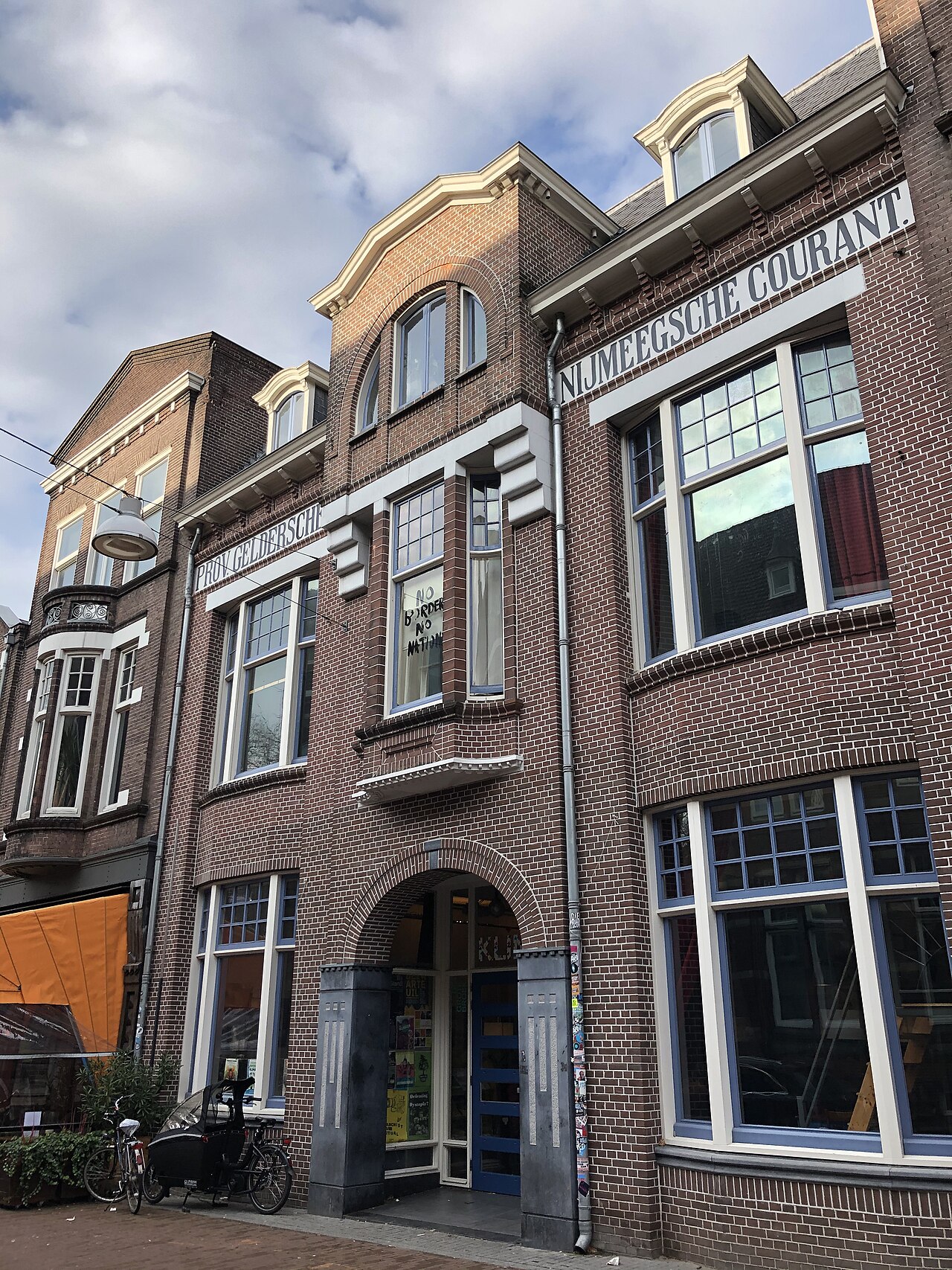
De Grote Broek, located in the heart of Nijmegen, Netherlands, is a legalized squat and self-managed social center that has been a significant part of the city’s cultural and political landscape since its inception. Occupied on November 4, 1984, the building was legalized starting in 2002. It occupies two sides of a city block, with entrances on Van Broeckhuysenstraat and Tweede Walstraat. The project comprises two separate housing cooperatives living above a café on one side, and Extrapool and a music venue on the other. The center hosts groups with shared political objectives, making it a hub for activism and community engagement.
From Dereliction to Legalization
The building that houses De Grote Broek has a storied past. Initially, it served as the premises for two newspapers, the Provinciale Geldersche and the Nijmeegsche Courant. It later became a furniture shop before falling into disrepair in the 1980s. The squat was initially named De Grote Karel after the owner, but it was later renamed De Grote Broek, reflecting its location on Van Broeckhuysenstraat. The death of the owner in 2002 catalyzed the legalization process, with the city of Nijmegen purchasing the building. Negotiations between the squatters and the housing corporation Standvast Wonen led to the squatters becoming legal tenants, and renovations were completed in 2009.
Music and Cultural Activities
De Grote Broek is not just a residential and political space; it is also a vibrant cultural venue. The café, De Klinker, offers vegan food and has its roots in another squat from the 1970s. The music venue, De Onderbroek, located in the basement, has been hosting a variety of events, including punk and hardcore gigs, since 1986. This venue is a crucial part of the local music scene, providing a platform for alternative and underground music. Additionally, Extrapool, an artist-run initiative, and the anarchist library De Zwarte Uil (The Black Owl) contribute to the center’s cultural offerings. Organizations such as Anarchist Black Cross Nijmegen, Stichting Gast, and Stichting Straatmensen, which work with migrants and the homeless, also operate within the center.
Recent Developments
In November 2014, De Grote Broek celebrated its 30th anniversary, marking three decades of community and cultural activism. In 2018, the center faced opposition from an extreme right group offended by a ‘Refugees Welcome’ picnic organized by De Grote Broek. The group demonstrated for the closure of the center, labeling it a “violent breeding ground for extreme leftism.” Around the same time, tensions flared between right-wing supporters of Zwarte Piet celebrations and left-wing activists who view the tradition as racist. In 2019, an individual was arrested near De Grote Broek for making a death threat against politician Thierry Baudet, following a demonstration in Amsterdam. Looking to the future, in 2026, De Grote Broek announced a project to purchase the building for 1.7 million euros, with 1 million euros to be financed through loans. This move aims to secure the center’s future as a bastion of cultural and political activity in Nijmegen.
Verified venue information
| Location | Nijmegen, Netherlands |
|---|---|
| Opened | 1984 |
| Official website | grotebroek.nl |
| Information checked | 2026-08-26 |
Map
Sources
Wikipedia / Wikidata / Official website
Image: Hay Kranen / CC BY 4.0 CC BY 4.0